What is Amalaki?
Amalaki is a fruit that grows on a moderate-size deciduous tree native to the tropical subcontinent of India. Amla berry fruit is smallish—about a half to one inch in diameter, with many seeds—and is smooth on the outside. All parts of the plant are used in various Ayurvedic herbal preparations, including the fruit, seed, leaves, root, bark, and flowers.
Amalaki has a very interesting flavor when eaten fresh. It is very sour when you bite into it, but after a few minutes it becomes sweet in the mouth. In Ayurveda, this is called the vipaka, or aftertaste. Learn more about the therapeutic properties of taste in Ayurveda.
The Best Among Rejuvenating Herbs
The Charaka Samhita, one of the ancient texts of Ayurveda, has this to say about amalaki:
- "Of all the rasayanas, Amalaki is revered as one of the most potent and nourishing; Amalaki is the best among rejuvenative herbs.” (Charaka Samhita, Sutrasthana 4:11-13, 16)
- "Amalaki is the best among the sour fruits." (Sushruta Samhita, Sutrasthana, 46:334)
A Divine, Tridoshic Plant
In India, amalaki is revered in several traditional Vedic festivals. The botanical is referred to as divaushadhi in the ancient literature of the Puranas, which means it is a divine plant, or divine Ayurvedic medicine.
Why divine? One of the properties that makes amalaki so special is that it contains five of the six Ayurvedic tastes: sweet, sour, bitter, astringent, and pungent. The only taste missing is salty. This rich combination of flavors gives amalaki a holistic, balancing effect on the doshas. It is tridoshic in nature, which means that it balances all three doshas. Amalaki is good for all seasons, all weather conditions, and all body types. Very few fruits have this quality.
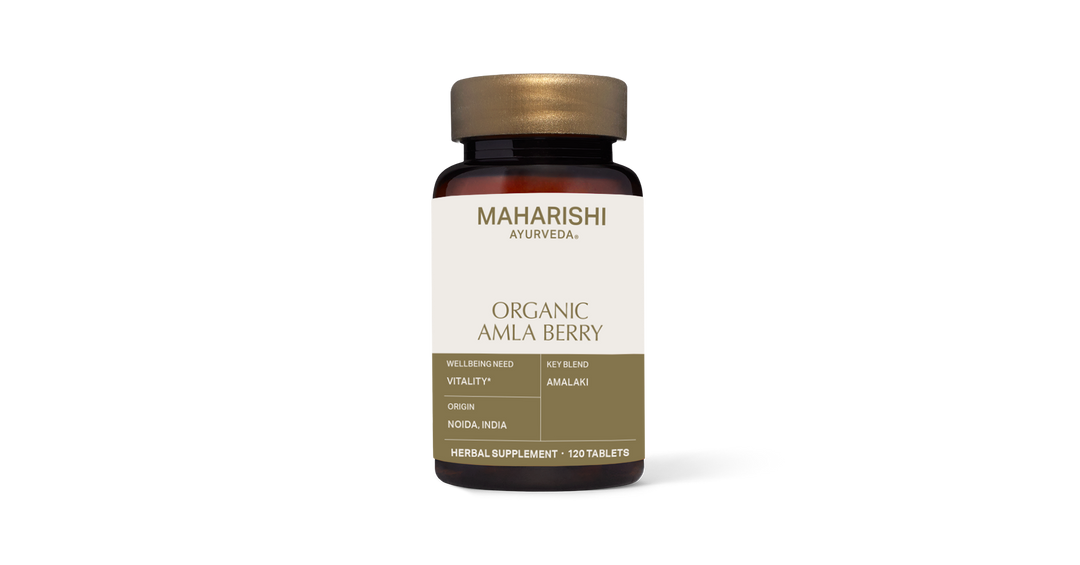
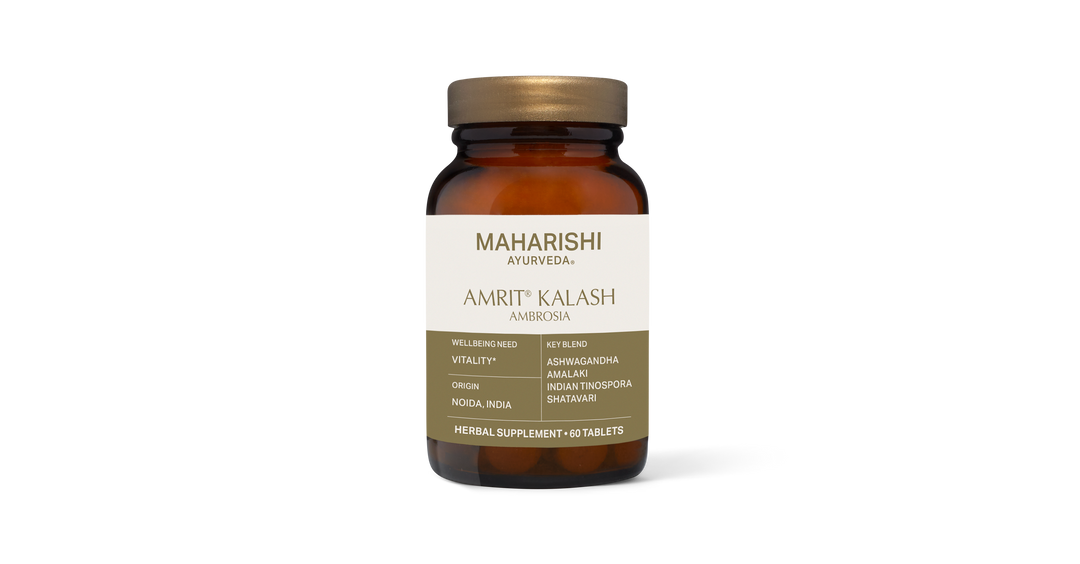
The fruit of this plant—a small berry—is the only ingredient in our Organic Amla Berry tablets. Amalaki fruit is also a major ingredient in our signature Amrit Nectar Paste and Amrit Ambrosia Tablets.
19 BENEFITS OF AMALAKI
In addition to being tridoshic, amalaki has many more benefits.
1. Excellent source of Vitamin C
Amla berry is a natural source of Vitamin C, containing about 720 to 921 mg of Vitamin C for every hundred grams of edible material. It is one of the most concentrated forms of Vitamin C found in the plant kingdom—and, because the whole fruit is used rather than an active ingredient, it is easily assimilated by the human body. The Vitamin C in the amalaki fruit is bonded with tannins that protect it from being destroyed by heat or light.
2. Supports food absorption
Regular consumption of amla berry tablets—as found in MAPI's Organic Amla Berry—can help to strengthen your digestion, absorption, and assimilation of nutrients. Many MAPI customers who take this supplement have noticed that
they enjoy the taste of food better. Amla berry enhances all thirteen digestive fires (agnis) but works more slowly and gently than ginger or other digestion-enhancing herbs, so it can be taken by people with a lot of Pitta without fear of creating excess stomach acid. In addition, it supports the natural assimilation of iron for healthy blood.
3. Supports healthy levels of stomach acids
Because it improves digestion but does not heat the body, amla berry is ideal for calming mild-to-moderate hyperacidity and other Pitta-related digestive problems. It should always be taken with food in this case. (Learn easy ways to minimize acid indigestion with Ayurveda.)
4. Supports the liver
Amla berry helps purify the Rasa Dhatu (nutrient fluid) and Rakta Dhatu (blood), supporting the functions of the liver. It also stimulates the liver, aiding it in eliminating toxins from the body. Amla also helps maintain already-normal cholesterol heath.
5. Supports the brain and mental functioning
Amla berry is good for the brain. It is medhya, meaning it nurtures and enhances coordination among dhi (acquisition), dhriti (retention), and smriti (recall), nourishing the intellect and mental functioning. It also supports the nervous system and strengthens the senses. Learn more about Ayurveda’s take on the mind and memory.
6. Supports the heart
This powerful fruit is hridya, which means it nurtures the heart, blood, and circulation. It supports the cardiovascular system. On the other hand, amalaki sometimes acts as a cardiac stimulant. For this reason, if you have a heart condition, you should check with a medical doctor before using supplements like our Organic Amla Berry.
7. Supports the lungs
Organic Amla Berry helps pacify Kapha dosha as well. Therefore, this supplement is a wonderful tonic for strengthening and nourishing the lungs (which are a major seat of Kapha dosha in the body), and the entire respiratory tract. It also pacifies Shleshaka Kapha, which among other things governs moisture balance in the lungs.
8. Supports balanced elimination
Amla berry, as found in MAPI's Organic Amla Berry, also pacifies Apana Vata, thus helping with the downward flow of energy in the body. This keeps the function of elimination regular and eases occasional constipation.
9. Supports fertility
By balancing Apana Vata and by nurturing all the dhatus (bodily tissues), amla berry also helps keep menstruation regular and healthy. It supports the reproductive systems of both men and women and can be helpful to those trying to conceive. Amalaki is a vrishya herb, which means that it enhances all the seven bodily tissues, including the reproductive tissue.
It nurtures the ovaries and sperm, and it has a property known as garbhasthapana, which means it enhances fertility and the possibility of conception. Amalaki is especially nurturing for women, strengthening the uterus and supporting reproductive health.
10. Supports the urinary system
Because it enhances all the 13 agnis and supports Apana Vata, amla berry is especially supportive to the urinary system and can be helpful if you experience a mild burning sensation while urinating. It supports natural diuretic action, but does not force water from the body like diuretic pills. In other words, it helps eliminate waste from the body but does not overstimulate the urinary system.
11. Supports the skin
Because amla berry strengthens digestion, helps the liver detoxify, and is a natural source of Vitamin C and minerals, this botanical is very good for the complexion. Amla Berry moisturizes the skin, helps cleanse the tissues of toxins, and supports the immune system of the skin. It helps enhance natural glow and luster. Learn how to do a DIY Ayurvedic spa day at home.
12. Supports healthier hair
Amla berry helps boost the absorption of calcium, thus supporting healthier bones, teeth, hair, and nails. It also helps maintain youthful hair color, and supports the strength of the hair follicles, so there is less thinning with age.
13. Acts as a body coolant
Although amla berry is good for all doshas and seasons, it is especially effective in the hot season to cool Pitta dosha. It is an excellent rasayana for people with Pitta and Vata body types.
14. Flushes out toxins
Individuals who have been eating "junk" food for a while tend to have accumulated deposits of preservatives and additives in the liver. Amla berry helps support the liver in flushing out chemicals and additives from the physiology.
15. Supports vitality
Because it has five tastes and supports all the doshas and many body functions and cleanses the blood and the microchannels of the body, amla berry increases energy and helps you rebound from fatigue. It supports vitality through the regeneration of cells—the process by which tired, old cells are replaced by vital, new ones.
16. Supports the eyes
Amla berry is called chakshushya, which means "strengthening the eyes" (chakshu means "eye" and ayushya means “rasayana” or rejuvenative, so it is literally a "rasayana for the eyes"). It supports the health of the eyes by enhancing both Ranjaka Pitta (the subdosha of Pitta that governs liver function and the blood plasma) and Alochaka Pitta (the subdosha of Pitta that governs the eyes and vision).
17. Supports muscle tone
Amla berry enhances protein synthesis, which is why it is good for strengthening muscles and building lean muscle mass. Its unique Ayurvedic action offers athletes and bodybuilders a natural way to tone muscles and build lean mass.
18. Has antioxidant properties
Amla berry, as found in MAPI's Organic Amla Berry tablets and other rasayanas that contain Amalaki—such as our Amrit Nectar Paste and Amrit Kalash Ambrosia—have antioxidant properties that help against the effects of free radicals, and support healthy aging.
19. Supports the immune system
All of the benefits already mentioned show that amla berry lends great support for the immune system.
All About Rasayanas
Rasayanas are the cream of the crop of Ayurvedic herbs and formulas. These unique botanicals and botanical preparations have remarkable rejuvenating and longevity-enhancing qualities. The traditional Ayurvedic text, the Charaka Samhita, defines a rasayana as "that which promotes strength and immunity against diseases."
There are two types of rasayanas: those that can be taken to promote longevity, memory, and intelligence; and those that address health imbalances after they surface.
Rejuvenation Through Rasayanas
The Charaka Samhita says, "Rasayana therapy has for its object the prolongation of human life, and the refreshment and invigoration of the memory and the vital organs. It deals with formulas that enable one to retain youthful vigor up to a good old age, and which generally serve to make the human nervous system invulnerable to disease and decay. Rasayanas also create ojas in the body."
Rasayanas and Ojas
Rasayanas enhance ojas in the body. Ojas is the most refined product of digestion and metabolism. Ojas is equated with immunity and strength. The more ojas your digestion produces, the greater your immunity to disease. Ojas supports bliss, intelligence, and higher states of consciousness.
The Sushruta Samhita says, "By bala (strength) or ojas, the muscle tissue becomes full, all movements become free and perfectly coordinated, voice and complexion become clear, and externally and internally the activity of the organs of action and the sense organs becomes intelligent and evolutionary."
Rasayanas convert easily into ojas, and thus infuse qualities of ojas into the body. The skin becomes lustrous, the eyes sparkling, the temperament stable and blissful, the mind intelligent and calm, and the body free of imbalance. Ojas also supports the experience of more evolved, expanded states of consciousness.
Rasayanas and Longevity
Rasayanas such as amalaki have other actions. The Ayurvedic texts mention that they promote longevity, memory, intelligence, youthfulness, stable progeny, strength and immunity of the body, strength of the sense organs, the quality of purity (sattva), a clear voice and sweet and successful speech, respectability (due to a pure nature, good health, and prosperity), and invincibility.
The Ultimate Ayurvedic Rasayana: Amrit Kalash
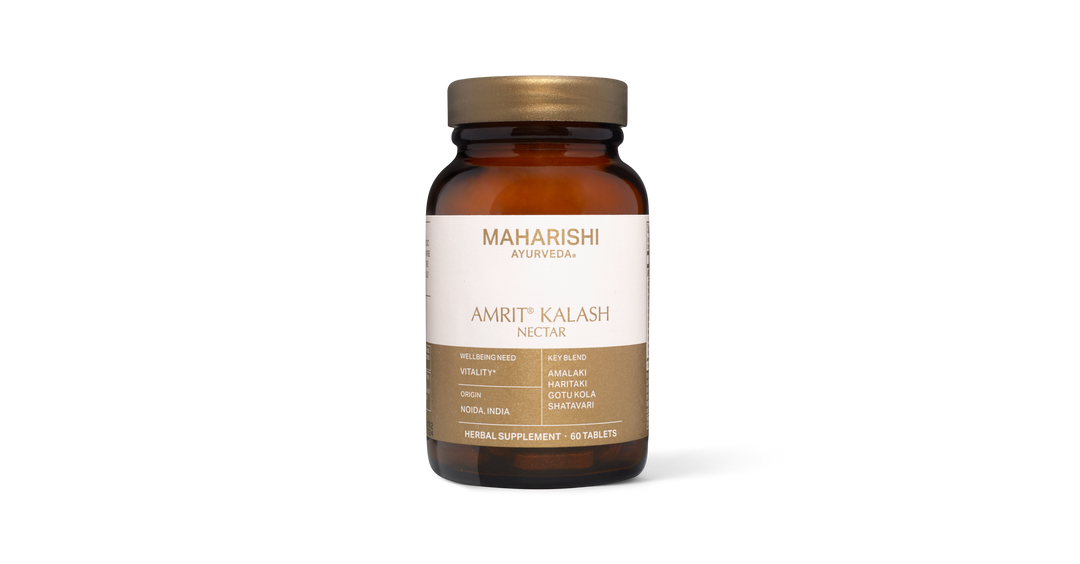
Amalaki is a major ingredient of Maharishi Amrit Kalash Nectar Paste, which, when taken in combination with Maharishi Amrit Kalash Ambrosia Tablets, is the most powerful rasayana of all. The Indian Gooseberry becomes an even more effective rasayana when combined with other rasayana ingredients in Amrit Kalash. Because this formula contains amalaki as its main ingredient, Maharishi Amrit Kalash offers many of the same benefits as amalaki (such as supporting mental function, digestion, emotional balance, functioning of the heart, respiratory system, physical strength, and the development of higher states of consciousness).
SCIENTIFIC RESEARCH ON AMALAKI
Emblica officinalis—a.k.a. the fruit known as amalaki—has been the subject of hundreds of scientific studies.
Amalaki is a powerful rasayana on its own, and is also contained in the most powerful multi-herb rasayana, Maharishi AyurVeda's Amrit Kalash. Both alone and as part of Amrit, Amalaki has been found in research to ease the side-effects of chemotherapy.
Research also shows that this remarkable fruit has antioxidant properties and that it supports the liver in maintaining healthy cholesterol levels.
Harvesting Amalaki For Bio-Intelligence
At Maharishi AyurVeda, we always follow the traditional methods for harvesting and processing the fruit, as described in the Ayurvedic texts. This protects the intelligence of the plants. Using the ancient, traditional methods ensures that the refined qualities of the amla plant are preserved—and even enhanced.
Grown in Protected Areas
Because it is considered a divine plant, amla berry is more delicate—more complex—than many other plants grown in the wild. It must be handled very carefully to maintain its efficacy, purity, and divine qualities.
Firstly, the plants must be grown in a pure environment. Half of our plants grow naturally in the wild in pristine areas, and others (still of the wild variety) are planted in protected areas far from the air and water pollution of cities, and in places where the soil and water have not been damaged by agricultural chemicals or waste material containing heavy metals.
Tended with Sattva
Secondly, the caretakers must be of a sattvic (pure and uplifting) nature themselves. Our plants are tended by people who handle the plants with love. They are trained to follow Ayurvedic methods of growing and harvesting the fruits, and take their role seriously in tending these divine plants. Just as food prepared in a loving, pleasant environment is nurturing, herbs gently cared for or taken from their natural habitat are nurturing in their action.
At Maharishi AyurVeda, we use the smaller forest variety of amalaki that grows in the wild on the Indian subcontinent. There is a larger hybrid variety now available that produces a bigger fruit, but we don't use that because it is not the traditional fruit mentioned in Ayurvedic texts. Our focus is always on authenticity. To use a computer software analogy, the wild-crafted plant, according to Ayurveda, offers a more complete package of intelligence, for a more bioavailable—or usable—upload of Nature's intelligence.
Interestingly, the forest variety of amalaki has bigger seeds and smaller fruit than the hybrid variety, which means that you must collect many more fruits to make the rasayana. It takes more time and labor, but provides a superior raw material. It respects the intelligence of Nature.
Handpicked at the Peak of Ripeness
The Ayurvedic texts specify that the amalaki fruits should be hand-picked at the exact peak of ripeness. Our fruits are picked only when they meet these requirements. Then, once harvested, the entire batch is inspected to make sure that it meets the traditional requirements for optimum ripeness.
Meticulous Laboratory Testing
Finally, the batch is given a sophisticated laboratory test involving thin-layer chromatography and fingerprinting to judge the level of ripeness as prescribed in the Ayurvedic texts. High-tech scans are performed to check for the presence of heavy metals or biological or chemical residues. Only when the fruit meets these stringent standards is the batch ready for processing.
Amalaki Processing for Potency and Power
The process itself involves drying and crushing the amalaki into powder, then dipping it in fresh amalaki juice, then again drying the mixture. This dried mixture is again ground into a powder and mixed with fresh juices of the fruit. This procedure is repeated 21 times. The purpose of this meticulous processing is to enhance the nourishing and rejuvenating qualities of the amalaki fruit. The fruit alone is nourishing and can be eaten raw, cooked in a chutney, or dried into a powder, but its rasayana qualities become enhanced several times over when it is processed according to the traditional Ayurvedic methods.
This processing method makes the rasayana many times more powerful than the simple fruit or fruit powder. Traditional Ayurvedic processing enhances amalaki’s potency and increases the natural intelligence of the fruit. We do this without destroying or disturbing any of the plant’s delicate qualities. Learn more about samyoga, the Ayurvedic art of herb blending.
Testing and Safeguarding
Processing amalaki is a very sophisticated process, especially when you are handling large batches of these very delicate fruits in a tropical climate such as India, where the chances of bacterial contamination is greater. That is why we place great importance on keeping our processing area absolutely sterile. This requires a dedicated team of sattvic, hygiene-conscious workers. Because of these challenges, the high level of purity of Maharishi AyurVeda's Amla products is truly unique.
To ensure the purity of our amalaki, we test the ingredients three times: before we prepare the formula (as mentioned earlier), after manufacturing, and again at an independent laboratory in the United States. Also, we never dry the fruit at a high temperature, which would destroy the vitamins and minerals as well as the amalaki’s divine intelligence. Instead, we use a specially designed drying system that dries the fruit slowly at room temperature (below 90 °F).
Traditional Ayurvedic agriculture for the highest-quality Amalaki/Amla Berry
At Maharishi Ayurveda, we specialize in producing herbal foods containing the highest level of nutrition and maximum botanical intelligence. Traditional Ayurvedic agriculture sees the plant kingdom as a storehouse of raw and, when properly prepared, bioavailable intelligence that can be delivered to various systems of the body, and which can also support higher states of consciousness.
You can enjoy the many, many benefits of amalaki—Ayurveda’s divine rasayana—in our popular Maharishi Amrit Kalash formulas. And if you'd like to enjoy even more benefits, you can try our Organic Premium Amla Berry tablets as well!
© 1999, 2023 Maharishi AyurVeda Products International, Inc. (MAPI). All Rights Reserved. MAPI does not provide medical advice, diagnosis or treatment. These statements have not been evaluated by the Food and Drug Administration. Products are not intended to diagnose, treat, cure or prevent any disease. See additional information.